
A home is a permanent residence that offers safety and provides sanctuary to those living in it. As a homeowner, you should ensure that every aspect of your property is up to date and fully functional. It is vital to invest in products that keep your home energy efficient throughout the year.
Green sources such as solar panels and heating systems provide efficient and affordable alternatives when conserving energy. You can also invest in other modern heating and cooling systems for your residential or commercial property.
Most property owners often ignore the role of insulation in making their homes energy-efficient. Investing in proper home insulation helps maximize the utilization of natural resources in your property, saving on energy costs. Poor insulation could prompt you to purchase expensive heating and cooling systems to suit your energy needs. You should always check on your insulation before investing in other sources to ensure you do not waste your money.
The home insulation experts in Georgia will help you pick the best option that increases energy efficiency. At Efficiency Plus, we offer a wide variety of insulation materials that make your household healthy and comfortable. Here’s what you need to know about home insulation and the different types available.
What Is Home Insulation?
Insulation is one of the best methods of increasing energy savings on your property. It is ideal for maintaining the desired temperature in your home throughout the year. It keeps your household under optimum temperature across every season, keeping it warm during winter and cooling it down during summer.
It provides resistance to heat flow into and out of your home, improving comfortability and lowering your heating and cooling costs.
Insulation works by regulating the three mechanisms of heat transfer, convection, conduction, and radiation. Most insulation materials reduce the rate of conductive and convective heat flow in a building. Other systems are made of barriers that regulate radiant heat transfer through reflection.
Proper insulation makes your home more energy-efficient and acts as a sound barrier, protecting against noise pollution.
What Are the Different Types of Insulation?
Homeowners spend more than 45% of their total energy bills on heating and cooling systems. Insulation cuts down about 15% of the heating and cooling costs and 11% of the total energy costs in a household. Insulating exterior walls, interior walls, basement walls, the attic, crawl spaces, and floors will go a long way in ensuring that you save money.
Several types of insulation are available on the market, each with its unique characteristics. They serve a similar purpose but differ in their application in a structure. The most common types of insulation include spray foam, blanket batts and rolls, loose-fill, foam boards, and reflective barriers. Insulation materials such as mineral wool, natural fibers, polystyrene, polyisocyanurate, perlite, and phenolic foam are used to make insulation products.
-
Spray Foam Insulation
Spray foam insulation is ideal for sealing air leaks and gaps in existing walls. Liquid polyurethane is pressure sprayed into a wall cavity and allowed to expand and harden to a thick, solid foam. The method enables you to cover a large surface area and access small spaces that are hard to reach. The R-value of spray foam is higher than that of other insulation materials, making it more costly to purchase and install.
There are two forms of spray foam insulation, open-cell spray foam insulation, and closed-cell spray foam insulation. Closed-cell foam is denser and has a higher R-value than open-cell foam. Foam insulation is ideal for attic insulation and sealing walls and floors.
-
Blanket Batt Insulation
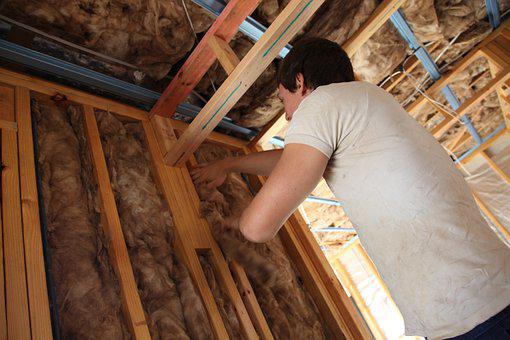
Blanket batts or rolls are the most common insulation products installed in several households countrywide. They are mostly made from fiberglass insulation material but could also come from rock wool, sheep’s wool, and plastic fibers. Fiberglass batts are widely used and preferred due to their affordability and ease of installation. They seal crawl spaces, ceilings, and unfinished attic floors. Their R-values range between R2.9 and R4.3 per inch of thickness, depending on their quality.
-
Loose-Fill Insulation
Loose-fill or blown-in insulation can come from fiberglass, cellulose, and mineral wool insulation materials. The materials are broken into granules and fine shreds before being blown onto a surface using a machine. Blown insulation is ideal for spaces where other forms of insulation would not suffice. It is commonly used to insulate walls, attics, crawl spaces, and ceilings. Its R-value ranges from R3.2 to R4.2 per inch of thickness, depending on its quality.
-
Foam Board Insulation
Rigid foam boards are made of expanded polystyrene, extruded polystyrene, or polyisocyanurate. They are stronger than blanket batts and rolls and offer a higher R-value per inch, making them more expensive. Foam boards are ideal for adding insulation to the roof, wall sheathing, attic hatches, and foundation walls. It offers almost twice the R-value of other insulation products at an equal thickness.
-
Radiant Barrier Insulation
Unlike other types, radiant or reflective insulation works by reflecting heat away from your home rather than controlling the flow. A reflective barrier such as aluminum foil is placed over a substrate material such as cardboard, Kraft paper, or polyethylene bubbles to facilitate insulation. Radiant barrier insulation does not offer resistance to heat flow, hence not measured by R-values. It can provide thermal insulation in the attic as it is the place most heat enters a building.
How Do I Choose Insulation for My Home?
You have to consider certain important factors before settling on one type of insulation for your property. First, you need to consider the part of your home that requires insulation. Different materials are suitable for different sections of your home, with some fitting new structures while others fit existing ones. You should also choose insulation material that will meet the R-value requirements in your locality.
Consider your budget, thermal performance, the durability of the material, ease of installation, and the impact of the material on air quality.
What Is the Most Effective Home Insulation Material?
Settling on the best insulation material for your home will promote energy efficiency and increase its resale value. The R-value is the factor that distinguishes one type of insulation from another. The higher the R-value, the more beneficial the material will be to your property.
The best insulation materials for buildings under construction are concrete forms, as they are built into the home’s structure. Spray foam insulation products are the best for existing buildings, providing a higher R-value and more energy-efficient than other products.
Insulation Experts in Valdosta, GA.
The effectiveness of your home’s insulation is determined by how well it was installed. Poorly installed insulation will not benefit your home and you will end up paying high energy bills due to problems such as air leakage. It is vital to rely on the insulation experts in South Georgia to do the installation work perfectly.
At Efficiency Plus, we fully understand the importance of proper insulation in your home and guarantee to do excellent work. Feel free to contact us today to get a free quote.

